Her late husband’s court case, United States v. Randall, established the medical necessity defense, but that was just the start of their fight.
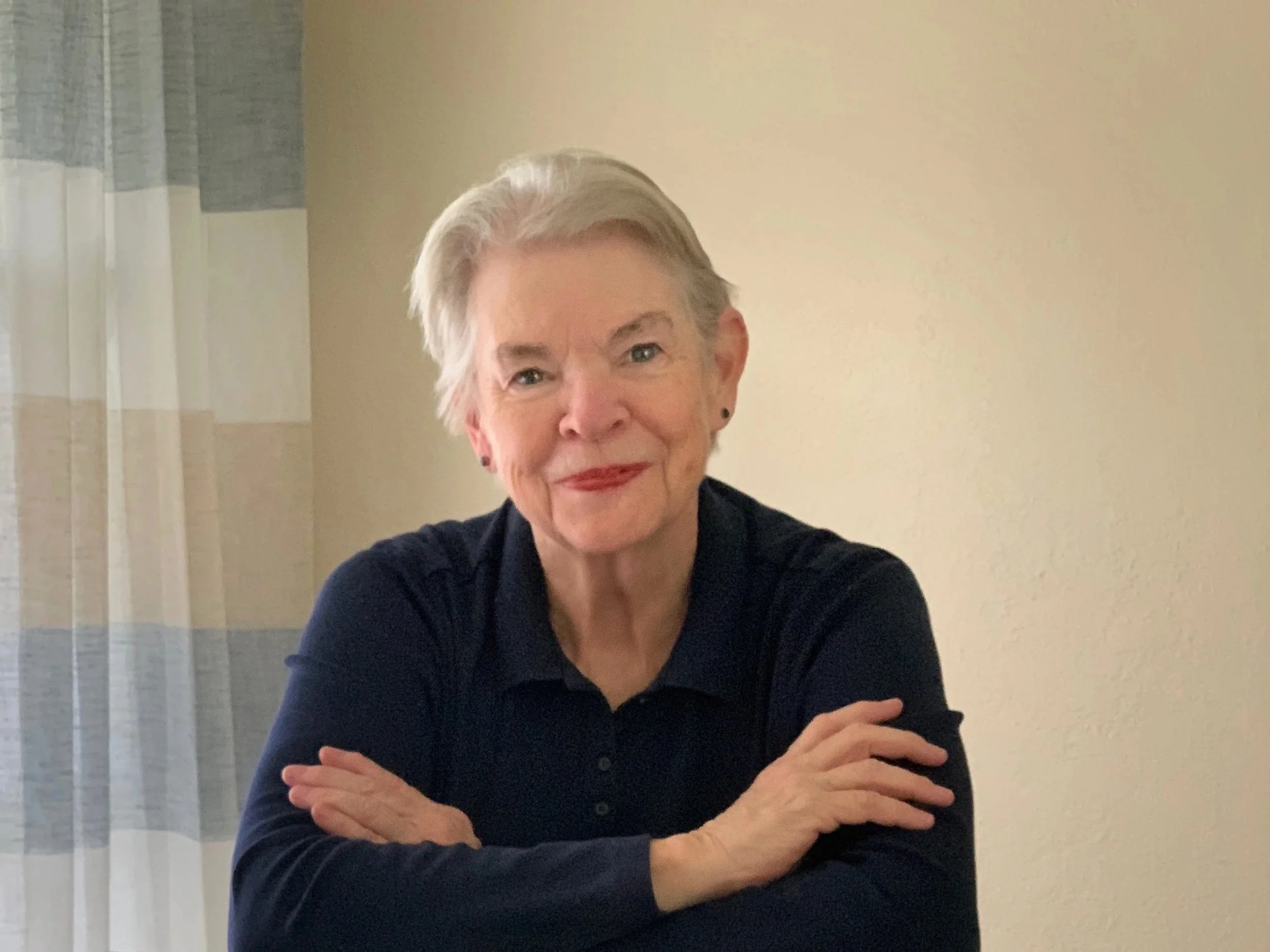
Alice O'Leary Randall / Photo courtesy of Alice O'Leary Randall / Project 50
Alice O’Leary Randall’s young adult life took a familiar path. Coming of age in the mid 1960s, she went to college, tried marijuana, met a young man, and fell in love. But in 1972, her seemingly uncomplicated, happy life took a dramatic turn, when the love of her life, Robert Randall, was diagnosed with glaucoma and told he had only three to five remaining years of sight.
“One night he decided to smoke away his problems: he put on some good music, poured himself a glass of Coca Cola, sat down to listen to the music, and smoked the joint,” says Alice. “Half hour later, he got up and he went by a window and noticed that the tricolored halos around the streetlights — which had been there before and which are one of the predominant signs of elevated ocular pressure for a glaucoma patient — those circles were gone.”
Robert had essentially conducted a medical marijuana study on just one patient: himself. And the experiment was a success. After that, says Alice, “we did everything we could to keep him supplied with marijuana.”
In 1976, a Washington D.C., court acquitted Robert Randall of marijuana possession on the grounds of medical necessity. He and Alice spent the next 20 years fighting to make that access available to other patients. After Robert died in 2001, Alice became the keeper of the story, and now — 50 years after the historical court decision — she’s sharing her story with us. Read her legal saga and love story below and dive even deeper by visiting our Cannabis Media Council’s 50 Years of Vision destination.
How did you and Robert meet, and how far was he into his medical marijuana journey when y'all got together?
Robert and I met in junior college in Bradenton, Florida, in 1966. We both went to Manatee Junior College, and at that point, Robert didn't know he had glaucoma. He had the visual symptoms of glaucoma, but when he told the optometrist about these symptoms, the optometrist just said, "Oh, son, you're just reading too much. Go get outside.”
This was the 1960s, and only old people got glaucoma in the 1960s. We know more now. We know, in fact, that often people are born with glaucoma and develop these symptoms quite early. Robert did wear glasses. I think from probably about the age of 4 or 5 years old, he was wearing glasses. So he always had ocular problems in his lifetime. It wasn't until six years later, 1972, that things got so bad that he went to an ophthalmologist, not an optometrist. The ophthalmologist diagnosed him as having glaucoma and said that he had about three to five years of remaining sight, which is a pretty sobering diagnosis when you're in your early 20s.
We went on to college together at the University of South Florida, and we had become great friends, you know, and suddenly realized we'd fallen in love. It was that kind of situation. It was a long courtship, but it was worth the while.
“The ophthalmologist said that he had about three to five years of remaining sight, which is a pretty sobering diagnosis when you’re in your early 20s.”
I finished up college with my bachelor of arts degree, a major in technical theater and lighting design, and after I got my degree, I worked about seven years in professional theater. Robert, meanwhile, stayed at the University of South Florida to get his master's degree in rhetoric, which is the art of public persuasion. He had hoped to go to Washington and become a great speechwriter. Fate had different plans for him, but fate certainly prepared him for his job ahead. He went to Washington D.C. I think around 1971, and then I moved to Washington in '73 and moved in with Robert.
Before you met Robert, did you have a relationship with cannabis, and did that change after you met him and got together?
This was 1966 to 1968, ‘69. It was the height of the hippie era, and at least on college campuses, marijuana was everywhere, and we were quite keen to try it out. So we secured some marijuana, tried it, liked it, and just enjoyed it the way normal people did at that time.
You have to realize there was no medical marijuana at this time. The federal government had done a particularly good job of erasing the concept of medical cannabis use from the medical literature, from the minds of medical professionals, and for the public. Of course, there were a few people who knew about it, but for the most part, marijuana was what you did for fun. So that's what we did. We did it for fun.
“Fate had different plans for him, but fate certainly prepared him for his job ahead.”
And how did Robert discover that cannabis helped with his vision problems?
After he moved to Washington D.C., Robert no longer had access to marijuana. He didn't have any friends, so he didn't have any contacts. Looking back on it, smoking marijuana in college really prevented the glaucoma from getting a foothold, and when he moved to Washington, the glaucoma became quite aggressive.
He was given this prognosis of three to five years of remaining sight, and it was a difficult time. The medications that he was given were more blinding than the disease, frankly. Robert had been driving a cab to make a living. Well, that was gone, and he had gone on welfare for a while, and it was a pretty down period for a young man of of 24, 25 years old.
“Fate had different plans for him, but fate certainly prepared him for his job ahead.”
He met a new friend, and the new friend gave him a marijuana cigarette. One night he decided to smoke away his problems: he put on some good music, poured himself a glass of Coca Cola, sat down to listen to the music, and smoked the joint.
Half hour later, he got up and he went by a window and noticed that the tricolored halos around the streetlights — which had been there before and which are one of the predominant signs of elevated ocular pressure for a glaucoma patient — those circles were gone, and he immediately put it together. What had happened? I like to think that his endogenous cannabinoid system had suddenly been awakened again, and his body knew what he needed. But of course we didn't even know about the endogenous cannabinoid system then. That was 20 years in the future to be discovered.
He knew what had happened, and yet he went, no, I'm just stoned. But then he noticed every time he smoked after that that the phenomena repeated itself and finally realized, hey, this stuff is helping me. Then I moved to Washington and moved in with Robert, and he hadn't told anyone about this. He told me, and I laughed, because there was no medical marijuana. “Don't be silly. You're just stoned.”
“Robert said to our lawyer, Paul Smollar, ‘Paul, you need to know, I’m using marijuana for medical purposes, and I’m using it to treat my glaucoma.’ Paul was very professional. He did not laugh....Bob said, ‘Well, what do you want me to do about that?’ And Paul’s answer was very simple: prove it. So we had to prove it, and that became our life’s work. ”
But with the passage of time, it became very apparent that it was helping, and so we did everything we could to keep him supplied with marijuana. That included letting a couple of volunteer plants sprout up on the sun deck one spring. A joint had been put out in the planter, and the seeds came up; why not let them go? Then we went on a vacation. We didn't take the plants inside. We probably should have.
The police were investigating a routine report of a break-in. We were on the second floor, and they were prowling around and saw our plants and got a search warrant. Came back. We were on vacation, and so they busted us in absentia. We came home and found a search warrant on the table, the apartment all broken up, marijuana gone. We got a lawyer and turned ourselves in. So it was a relatively benign bust. There were no handcuffs or paddy wagons. We were treated very well. But at the arraignment, after everything was done, we were officially criminals.
Robert said to our lawyer, Paul Smollar, "Paul, you need to know, I'm using marijuana for medical purposes, and I'm using it to treat my glaucoma.” Paul was very professional. He did not laugh. He smirked, but he did not laugh. He said, "OK, Bobby.” And Bob said, "Well, what do you want me to do about that?” And Paul's answer was very simple: prove it. So we had to prove it, and that became our life's work. That set us up for the rest of our lives.
He was his own test subject of one. So you had to figure out if anyone else knew about this medical benefit?
Yeah, we had to put together a case, and we were very fortunate: we lived in Washington D.C. and there were lots of resources available to us, including NORML. The first thing Robert did was go to NORML, and he met Keith Stroup, who was the founder and longtime leader of NORML. Keith didn't laugh. He didn't even smirk. He said, "Yeah, I got something here on my desk. Hold on,” and he pulled out a very thin little file that had like one or two articles in it and gave it to Bob. It was labeled “medical use.”
We learned that NORML had actually filed a petition with the federal government challenging the Schedule One classification. The marijuana in Schedule One had only just happened in 1972 when the Controlled Substances Act was was enacted, and I think it was in late ‘72 or ‘73 that NORML filed their petition to reschedule marijuana. We learned that there was some research ongoing through NIDA, the National Institute on Drug Abuse. NIDA was just a baby at the time. It had come into existence in ‘73 or ‘74, so they were a very young agency. But Keith gave Robert some numbers of people at NIDA to contact, and that was very fruitful.
“ I can still see [our lawyer] looking up from the information across his desk at us and saying, ‘Bob, this is history.’ And that was that.”
There were three researchers at that time looking into marijuana and glaucoma, and we got the numbers of all three. Robert called them, and every one of them were very interested in Robert. One in North Carolina agreed to research Robert with infused Delta 8 THC. The test was successful; it proved that it lowered Robert's intraocular eye pressure. But we later learned he really didn't have permission to do that test, so we didn't think we should use that in court. The jewel in the crown was Dr. Robert Hepler at UCLA, and Dr. Hepler was part of a team that was looking at the basic physiological aspects of marijuana.
Here we had proclaimed it to be as dangerous as heroin, and yet the very basic research had not yet been done on cannabis, and Congress had a problem with that. The senators made a deal: We'll allow this to go through in Schedule One, but we want some basic research done on this plant to find out what it is doing to people. A little team was set up at UCLA that looked at all aspects of cannabis use, and Dr. Hepler was looking at ocular.
So Robert called him, and Dr. Hepler was very, very interested in Robert, because Robert had used marijuana and had realized what was happening — that made him rather intriguing — and he was young. Most of the people that Dr. Hepler was seeing who had glaucoma were older. They were marijuana naive, and they weren't the best research subjects in some respects.
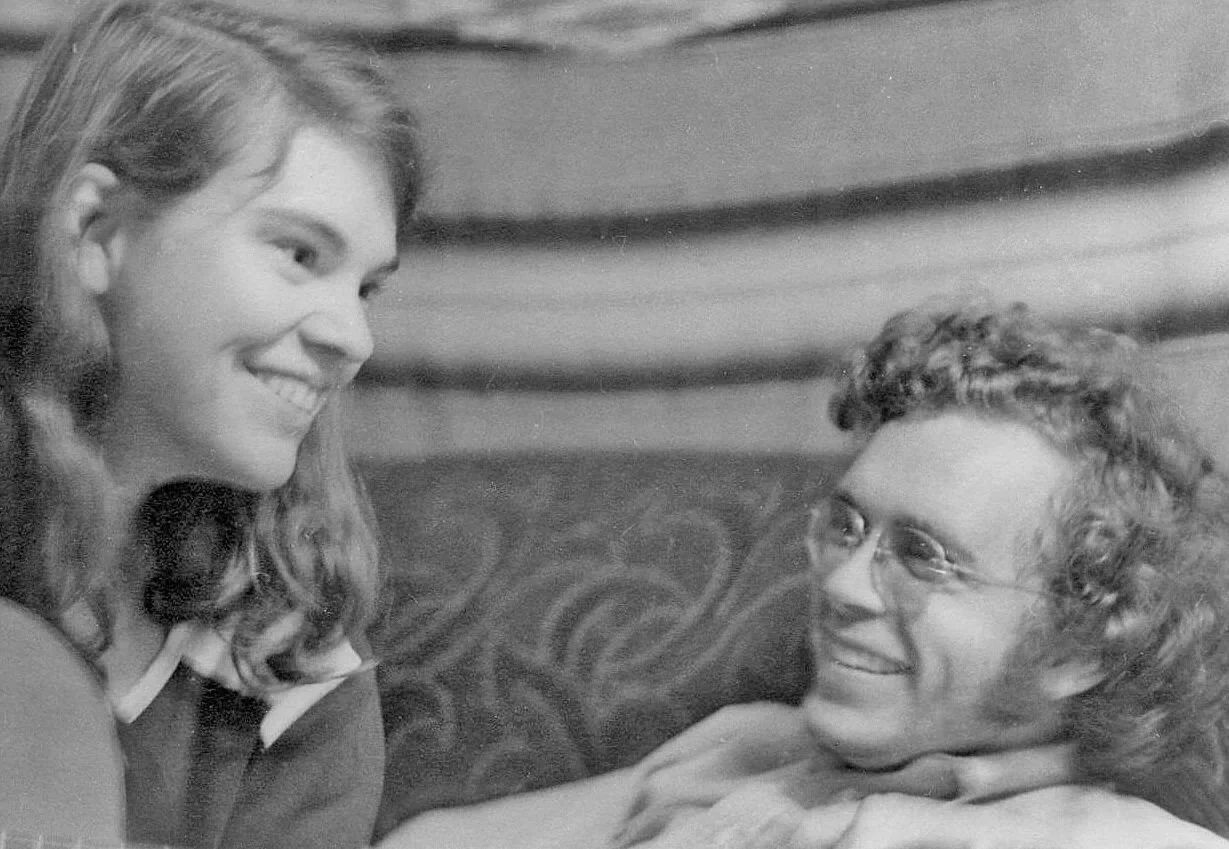
Alice O’Leary Randall and Robert Randall circa 1972 / Photo courtesy of Alice O'Leary Randall / Project 50
Long story short, Robert went to UCLA for 10 days of research. He was kept on campus, kind of a lockdown. And he was tested on every possible combination of conventional glaucoma medications, THC pills, and marijuana cigarettes. Dr. Hepler determined that Robert needed 10 marijuana cigarettes a day, in addition to several conventional glaucoma medications, in order to get the pressure in his eyes low enough to preserve his sight.
Needless to say, that was huge for our case, because we now had a respected doctor, we had reams of research on Robert's case specifically, and certainly it was Dr. Hepler's research that swayed the day in the court. So armed with that information, we came back. We showed it to Paul, the lawyer who smirked, and he read through that information. I can still see him looking up from the information across his desk at us and saying, “Bob, this is history.” And that was that.
“We didn’t go into this expecting to found the medical marijuana movement. We went into this to save Robert’s sight. It was that simple.”
We knew that we'd done it. Now all we had to do was do it for the rest of the world. We finally went to trial in July of 1976, and Robert was found not guilty of marijuana cultivation by reason of medical necessity. Necessity is a very old legal tenet, dating back to the Magna Carta. It means that when you commit a crime, you're not guilty if the crime you're trying to avert is worse than the crime you have to commit to avert it.
At the same time, we had petitioned the National Institute on Drug Abuse for permission to use federal supplies of marijuana based on the Hepler research, and that petition, after some machinations, was finally approved. Both of those things — the not guilty verdict and the okay and delivery of supplies — both happened within two weeks of each other in November 1976, 50 years ago this month. And that was a huge moment. It was big, big news.
Forgive my ignorance, but you said the federal supply of marijuana. Was the government able to supply him with the marijuana that he needed to treat his illness?
The government had a marijuana farm, essentially, located at the University of Mississippi. I don't know precisely what year it was set up. I think they acknowledge that it was set up in the early 1970s, but we've had some indication over the years that it might have been going earlier. NIDA was at this point in time in charge of the farm. It grew the marijuana that Hepler used in his research, so we knew that the federal government had supplies. So that's what we asked for.
They considered their marijuana to be the only true marijuana, and any other marijuana they considered to be renegade or rogue marijuana. But they grew the only researched marijuana in the world, and it was the marijuana that Robert used for 20 years. He described it as ditch weed. The potency on it was only like 2.5% THC, very low potency when you think about what's available today. But it saved his sight.
I want to talk about another experience that you had, which was that you, as Robert's partner, were going to the Library of Congress and doing research on what you could find about the history of marijuana for medical use.
After we were arrested, Robert focused on NIDA and NORML, and I decided we needed to to know more about the history of things. How did things get to where they were today? We were only eight blocks from the Library of Congress and I became interested in the hearings from 1937. They were quite fascinating because it was a lot of vitriolic commentary that wasn't backed up by any research. Harry Anslinger, who was the head of the Federal Bureau of Drugs, he'd written the Marijuana Tax Act, and he was pushing this through as kind of his personal vendetta.
Harry Anslinger was a fascinating man. I take great umbrage with his thought patterns, but he was really a fascinating man. He wasn't particularly well-educated, and yet he worked his way up through federal positions, although there was some nepotism involved. But he was so bigoted and had such blinders when it came to science and had a real disdain for scientists and anyone in the medical profession, and that that came out quite obviously in reading these hearings.
But the gem that I pulled from these hearings that was most important to me and to Robert was the testimony from the AMA, the American Medical Association. They almost missed the hearings entirely. They had a lobbyist in Washington who was charged with keeping track of all of these drug bills that came along, but this was the “Marijuana” Tax Act, and Dr. William Woodward didn't know what marijuana was. Marijuana was a slang term, and he knew it as cannabis.
“Robert was the only individual in the country in 1976 who legally had permission to smoke marijuana. Sit on that for a moment. Today, there are millions of medical marijuana smokers, and that’s wonderful. But 50 years ago, there was one.”
Cannabis had been in the U.S. pharmacopeia, I think, from the second edition in the 1850s forward. There were something like 20,000 medical products at one point that used cannabis. It was used in medicine and it was well respected, and yet here we were about to totally outlaw it. So he hustled himself down to Capitol Hill, and he testified that Congress shouldn't outlaw medical use because — as he put it — future research may reveal new medical applications. That was like, wow, that was just gold.
The Library of Congress is a wonderful resource. It's the kind of thing that we see our current government going after in terms of shutting down access to truth, and we can't let that happen, because by using the Library of Congress, we were able to start our campaign to return marijuana to the pharmacopeia.
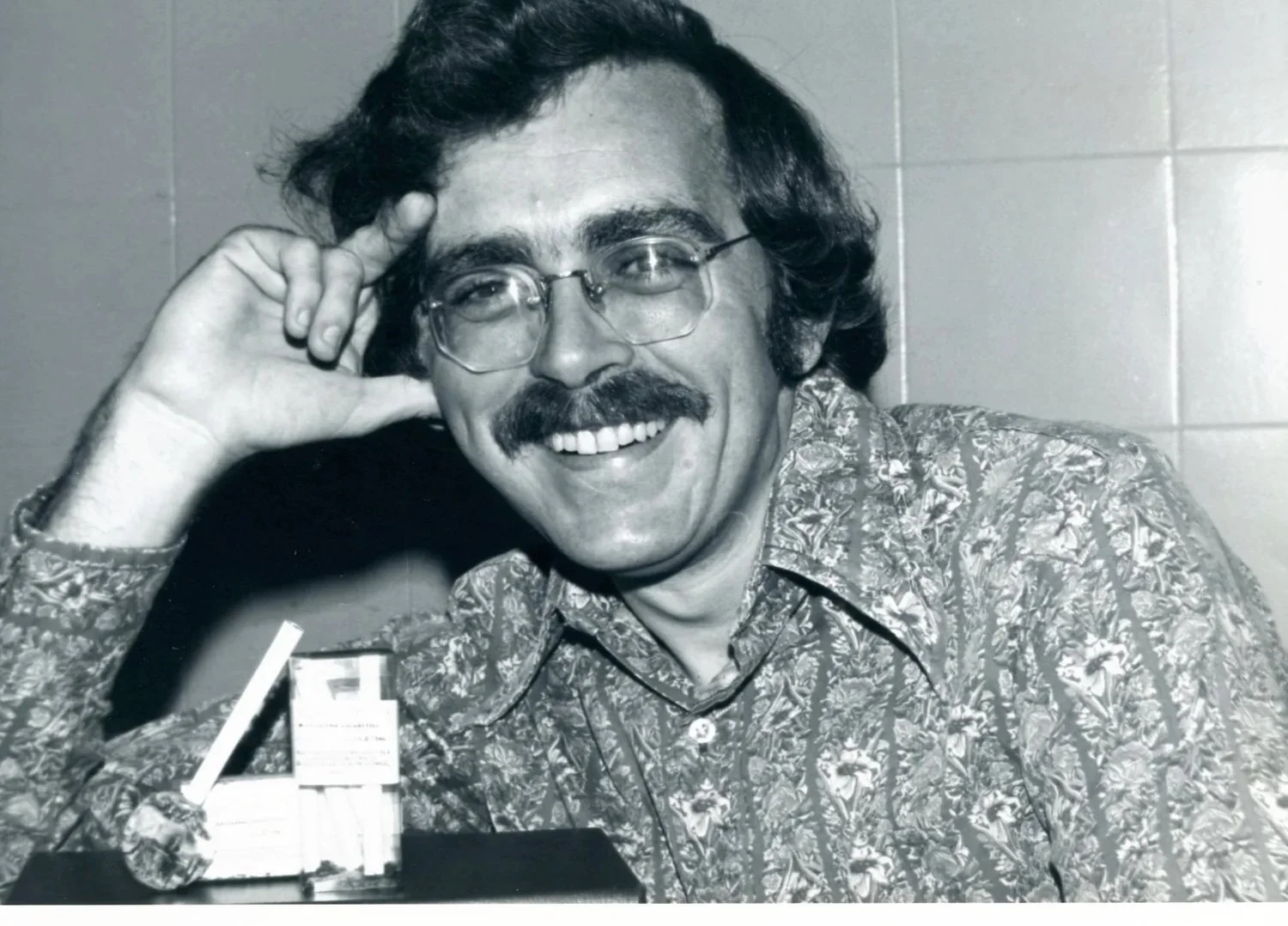
Robert Randall with his first legal supply, November 1976 / Photo courtesy of Alice O’Leary Randall / Project 50
Now 50 years later you're very focused on your own record-keeping and archive project and making sure that all of the information about what happened 50 years ago is preserved. How did your experience in the ‘70s impact your interest in preserving history? Why is this so important to you?
Without history being preserved, Robert and I wouldn't have had the data from those hearings to formulate our own case. We didn't go into this expecting to found the medical marijuana movement. We went into this to save Robert's sight. It was that simple.
But then once that had happened and the publicity broke on it, like I said, it was a big story. Robert was the only individual in the country in 1976 who legally had permission to smoke marijuana. Sit on that for a moment. I mean, that's just amazing to think of today. Today, there are millions of medical marijuana smokers, and that's wonderful. But 50 years ago, there was one.
So once that happened, we started hearing from other people who wanted the same thing that Robert had, because they had glaucoma or they had MS or they were undergoing cancer chemotherapy treatments, and they had discovered that cannabis helped — much like Robert, in many cases, they had discovered by accident — so they came to us and asked for help. Robert at one point said that he felt like the only one to make the lifeboat, and that there were cries in the water all around us. We couldn't walk away.
“Robert at one point said that he felt like the only one to make the lifeboat, and that there were cries in the water all around us. We couldn’t walk away. ”
The government would have been delighted if Robert had just shut up and lived his life, and they would have given him marijuana for as long as he kept quiet. But we couldn't. Robert couldn't, and I couldn't, and so we we started our journey.
Robert died in 2001, and we had left Washington. He was diagnosed with AIDS in 1994, and we left Washington in ‘95 and returned to Florida to our families. I thought I was going to lose him in ‘95, but I didn't. We had six more years together. We wrote our autobiography, Marijuana RX: The Patient's Fight for Medicinal Pot, and in doing that, we had to go through all of these old papers. This was in 1998, and that was our first foray in getting things organized.
Then in 2012, a friend in Michigan, Roger Winthrop, set up the Robert Randall Memorial Center, and he asked if he could have our papers. You know, at that point, I hadn't considered archives. Archives were something that I went to the Library of Congress to read. They weren't anything to do with me.
So I said sure. I got all of the papers up to him, but then the center folded, and he called me and he said, “Alice, I've got this friend at the University of Wisconsin, and I've I've told her about Robert’s and your papers, and she'd like to to have them for the archives at University of Wisconsin. Is that all right?” Well, I didn't want them back.There's only so long you can schlep around 20 boxes of paper in your life. So I said sure.
Our papers ended up at the Wisconsin Historical Society, which has a very good archive of early pharmaceutical products, apothecary products, and whatnot. So that's where the bulk of the papers are.
“You know, at that point, I hadn’t considered archives. Archives were something that I went to the Library of Congress to read. They weren’t anything to do with me. ”
I still have a number of things here. I kept all correspondence, newspaper clippings, and whatnot. A few years ago, when I realized that the 50th anniversary was coming up, I thought, Alice, you've got to get this stuff together, and you've got to get it out to people. During COVID, I had tried to look something up online — in fact, it was Robert's decision in 1976, United States v. Randall. The only place I could find it was behind paywalls at legal firms, and that made me mad.
And I realized that the first 20 years of the medical marijuana movement were all analog. It happened before the internet. Then we come to 1996. Internet is gearing up pretty quick, and Prop 215 in California passes, and everything going forward from that point is video and digital. The history of medical marijuana, when I was looking for it online, started in 1996. Well, you can imagine how I felt about that. I realized I had to digitize as much as I could, get it up online, which is what I've done.
“Just like we did in 1976, it needed to be done. So I did it.”
I have a Google Drive that's open to the public. It has about 1,000 news clippings from between 1976 and 1994, and they're available to anybody who wants to use them. I have started a Substack series where I write about various parts of that first 20 years, and I reference things back to the Google Drive. I'm trying to give people an idea that there's more out there. Just like we did in 1976, it needed to be done. So I did it. Frankly, it's been fun, and it's very interesting to see how things have changed, and yet stayed the same.
Of course, there are now other people from those early days. For example, Dr. Tod Mikuriya has his archives at NIH. Michael Aldridge, who is a cannabis historian, has given all of his archives to the Drug Policy Alliance, I believe. The University of Massachusetts has a very strong collection of early medical marijuana archives.
Over the past 50 years, how have misconceptions or understanding about cannabis evolved? Like, what has stayed the same, and what do you wish that more people still understood?
Well, the misconceptions, we're doing better on that. Certainly, the Reefer Madness thing has been revealed in all its ridiculous glory to be something that you go get stoned and laugh at. At least we're beyond that, but there's still some scientific misconceptions that are bothersome. It's a whack-a-mole sort of thing. You know, you think you've beaten it down, but then it pops up over here somewhere, or it comes at you from another country.
Cannabis is everywhere, and there's still a prejudice towards cannabis that I don't know if we'll ever be able to eradicate entirely. I think it's born into some people's genetic makeup to hate this plant. I at one time was calling it “botanical bigotry” — you hate the plant for no other reason than it's cannabis.
“I think it’s born into some people’s genetic makeup to hate this plant. I at one time was calling it ‘botanical bigotry’ — you hate the plant for no other reason than it’s cannabis.”
The most positive thing is the discovery of the endocannabinoid system. We've learned that we're essentially hardwired for cannabinoids, and so that knocked a lot of misconceptions out of the ballpark right there. I think back to when Robert smoked that joint and looked out and the tri-colored halos were gone, and he knew right away that something was happening inside of him, and so many others have described similar things to us over the years. I'm convinced we've just scratched the surface of what cannabis can do for us medically. I view our knowledge of cannabis as like our universe; it is constantly expanding outwards.
But we have to be on our guard because the other forces, the evil forces, they're still there, and they're still trying to knock it down. We can't become complacent. We really can't. We have not won.
“But we have to be on our guard because the other forces, the evil forces, they’re still there, and they’re still trying to knock it down. We can’t become complacent. We really can’t. We have not won.”
Aside from the obvious, which is allowing Robert to preserve his sight, how else has cannabis impacted your life in a positive way?
Well, it not only preserved his sight. I think it saved his life. Robert had AIDS, and when he was diagnosed, he was down to like 4 T cells. He was very critically ill, and yet he was 50 pounds overweight at the time of his diagnosis. We attributed that directly to marijuana. Marijuana gives you the munchies, and Robert always had a healthy appetite.
He did nearly die in 1995, actually twice. He had to go on something called total parenteral nutrition. He had to be fed through a tube in his chest for three months. He could take no solid food by mouth, and that was because his pancreas had become so inflamed from some of the AIDS medications he was using that it was in danger of bursting. And the only way to cool the pancreas was to stop food going through the digestive system.
So we got through all of that, and at that moment the AIDS cocktail had arrived on the scene. This was in 1996. That was three drugs — I don't recall their names at the moment — but they worked. They kept him alive for another six years, and I think cannabis saved his life, and there are AIDS patients around the country who will tell you the same thing.
Cannabis has given me a lot. Nowadays I look back on my life, and it's just extraordinary what we were able to do. Oother than being arrested, I can't think of a single negative way that cannabis impacted my life. It brought me into contact with wonderful people, so many wonderful patients that we that we helped over the years, most of whom sadly are now gone.
“That’s what cannabis did for me. It validated my life, and it’s been my honor. Truly.”
After Robert died, I took a break from cannabis for a while. I had made up my mind that I wanted to work in hospice, so I got my nursing degree and became a hospice nurse for six years, from like 2006 to 2012, and didn't do much with cannabis at all. Pretty much lost track of it. But then I was laid off from hospice the day before my 65th birthday.
I realized that a lot had happened [in cannabis], and maybe I should find out about it. They invited me to speak at the Patients Out of Time conference in Oregon that year, and I decided to buy myself a van, throw the dog in the van, and do a cross country tour with my dog. It was like a fact-finding trip; I learned about what was going on. I stopped in Colorado, met a bunch of wonderful people, including the folks at Mary's Medicinals who eventually hired me to be their spokesperson and their ambassador. I met all kinds of wonderful people, many of whom have become very good new friends, and I was suddenly back in the movement, and it was wonderful. It was also wonderful to be so validated, to have so many people come to me and say thank you, thank you and Robert for doing what you did, thank you. So that's what cannabis did for me. It validated my life, and it’s been my honor. Truly.
Dive even deeper into Robert Randall and Alice O’Leary Randall’s life and work on the Cannabis Media Council’s 50 Years of Vision archives.
